
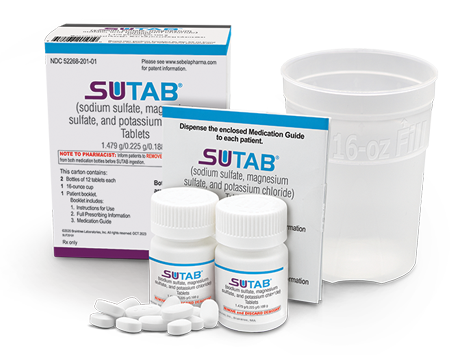
For representational purposes only.

What to Eat the Day BEFORE Your Colonoscopy
Please follow a low residue diet and do not eat anything after starting the bowel prep. Eat what is permitted unless otherwise directed by your doctor.
What You CAN Do
- You may have a low residue breakfast only. Low residue breakfast foods include eggs, white bread, cottage cheese, yogurt, grits, coffee, and tea.
- You may have clear liquids.
What You CANNOT Do
- Do not drink milk or eat or drink anything colored red or purple.
- Do not drink alcohol.
- Do not take other laxatives while taking SUTAB.
- Do not take oral medications within 1 hour of starting each dose of SUTAB.
- If taking tetracycline or fluoroquinolone antibiotics, iron, digoxin, chlorpromazine, or penicillamine, take these medications at least 2 hours before and not less than 6 hours after administration of each dose of SUTAB.

Liquids That Are OK to Drink
- Coffee or tea (no cream or nondairy creamer)
- Fruit juices (without pulp)
- Gelatin desserts (no fruit or topping)
- Water
- Chicken broth
- Clear soda (such as ginger ale)
The Dosing Regimen
SUTAB is a split-dose (2-day) regimen. A total of 24 tablets is required for complete preparation for colonoscopy. You will take the tablets in two doses of 12 tablets each. Water must be consumed with each dose of SUTAB, and additional water must be consumed after each dose.
Day 1, Dose 1 - On the Evening Prior to Colonoscopy
before, during, and after taking SUTAB
Swallow the 12 tablets with the first 16 ounces of water
The day before your colonoscopy, open the first bottle of 12 tablets and take SUTAB as described below.
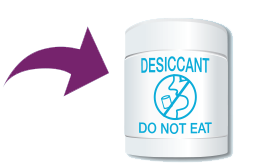
STEP 1 Open 1 bottle of 12 tablets. Remove and discard the desiccant.
Remove and discard the desiccant from the second bottle and close the bottle. Use the second bottle for the second dose on the morning of the colonoscopy.
STEP 2 Fill the provided container with 16 ounces of water (up to the fill line).
Swallow 1 tablet every 1 to 2 minutes. You should finish the 12 tablets and the entire 16 ounces of water within 20 minutes.
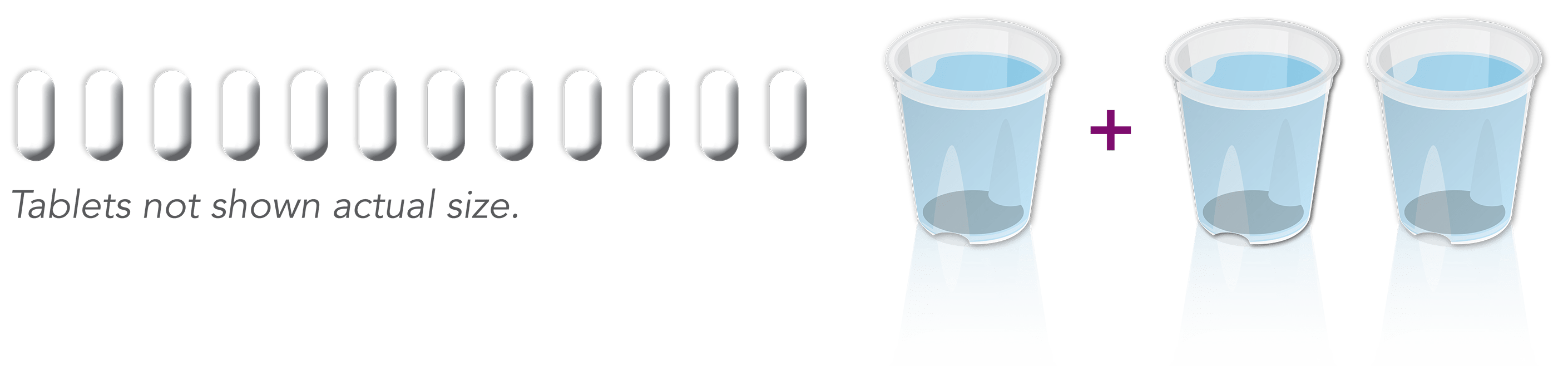
Drink the additional two 16 ounces of water
STEP 3 Approximately 1 hour after the last tablet is ingested, fill the provided container again with 16 ounces of water (up to the fill line), and drink the entire amount over 30 minutes.
STEP 4 Approximately 30 minutes after finishing the second container of water, fill the provided container with 16 ounces of water (up to the fill line), and drink the entire amount over 30 minutes.
Day 2, Dose 2 - The Morning of the Colonoscopy (5 to 8 hours prior to the colonoscopy and no sooner than 4 hours from starting Dose 1)
Swallow the other 12 tablets with another 16 ounces of water
- Continue to consume only clear liquids until after the colonoscopy.
- Repeat Step 2 to Step 4 from Day 1, Dose 1.
- If you experience preparation-related symptoms (for example, nausea, bloating, or cramping), pause or slow the rate of drinking the additional water until your symptoms diminish.
- Complete taking all SUTAB tablets and water at least two hours prior to colonoscopy.
Important Reminder:
- SUTAB is an osmotic laxative indicated for cleansing of the colon in preparation for colonoscopy in adults.
- Be sure to tell your doctor about all the medicines you take, including prescription and non-prescription medicines, vitamins, and herbal supplements. SUTAB may affect how other medicines work.
- Medication taken by mouth may not be absorbed properly when taken within 1 hour before the start of each dose of SUTAB.
- The most common adverse reactions after administration of SUTAB were nausea, abdominal distension, vomiting, and upper abdominal pain.
- Incidents of patients ingesting the desiccant contained in the bottles have been reported, be sure to discard both of the desiccants as instructed.
- Contact your healthcare provider if you develop significant vomiting or signs of dehydration after taking SUTAB or if you experience cardiac arrhythmias or seizures.
- If you have any questions about taking SUTAB, call your doctor.
SUTAB® (sodium sulfate, magnesium sulfate, and potassium chloride) tablets, for oral use
SUTAB is indicated for the cleansing of the colon as a preparation for colonoscopy in adults.
ADDITIONAL IMPORTANT SAFETY INFORMATION
What is the most important information I should know about SUTAB?
SUTAB and other bowel preparations can cause serious side effects, including:
Serious loss of body fluid (dehydration) and changes in body salts (electrolytes) in your blood.
These changes can cause:
- Abnormal heartbeats that can cause death.
- Seizures. This can happen even if you have never had a seizure.
- Kidney problems.
Do not take SUTAB if your healthcare provider has told you that you have:
- a blockage in your bowel (obstruction) or a problem with food moving too slowly through your intestines (ileus).
- an opening in the wall of your stomach or intestine (bowel perforation).
- a very dilated intestine (toxic colitis or toxic megacolon).
- problems with food and fluid emptying from your stomach (gastric retention).
- allergies to any ingredient in SUTAB.
What are the possible side effects of SUTAB?
- Changes in certain blood tests. Your healthcare provider may do blood tests after you take SUTAB to check your blood for changes. Tell your healthcare provider if you have any symptoms of too much fluid loss, including:
- vomiting
- dizziness
- urinate less than usual
- nausea
- stomach (abdominal) cramping
- trouble drinking clear liquid
- bloating
- headache
- vomiting
- dizziness
- urinate less than usual
- nausea
- stomach (abdominal) cramping
- trouble drinking clear liquid
- bloating
- headache
- Heart problems. SUTAB may cause abnormal heartbeats.
- Seizures.
- Ulcers of the bowel or bowel problems (ischemic colitis). Tell your healthcare provider right away if you have severe stomach-area (abdominal) pain or rectal bleeding.
- Serious allergic reactions. Get medical help right away if you have any signs and symptoms of a serious allergic reaction while taking SUTAB, including:
- swelling of your hands, face lips, mouth or tongue
- breathing problems
- raised red patches on your skin
- rash
- severe itching
- swelling of your hands, face lips, mouth or tongue
- breathing problems
- raised red patches on your skin
- rash
- severe itching
- Take SUTAB exactly as your healthcare provider tells you. Each SUTAB bottle contains a drying agent (desiccant) to keep the tablets dry. Do not swallow the desiccant. Remove and throw away the desiccant from both bottles the evening before your colonoscopy. Swallowing the desiccant by mistake has been reported and may cause choking or stomach and bowel problems.
Before taking SUTAB, tell your healthcare provider about all of your medical conditions, including if you:
- have heart problems.
- have stomach or bowel problems including ulcerative colitis.
- have problems with swallowing or gastric reflux.
- have a history of seizures.
- are withdrawing from drinking alcohol or from taking benzodiazepines.
- have a low blood salt (sodium) level.
- have kidney problems.
- are pregnant. It is not known if SUTAB will harm your unborn baby. Talk to your healthcare provider if you are pregnant.
- are breastfeeding or plan to breastfeed. It is not known if SUTAB passes into your breast milk. You and your healthcare provider should decide if you will take SUTAB while breastfeeding.
Tell your healthcare provider about all the medicines you take, including
- Prescription and over-the-counter medicines, vitamins, and herbal supplements.
- SUTAB may affect how other medicines work. Medicines taken by mouth may not be absorbed properly when taken within 1 hour before the start of each dose of SUTAB.
- Especially tell your healthcare provider if you take: medicines for blood pressure or heart problems, kidney problems, or seizures, water pills (diuretics), non-steroidal anti-inflammatory drugs (NSAIDs), medicines for depression or other mental health problems, and laxatives. Do not take other laxatives while taking SUTAB.
- The following medicines should be taken at least 2 hours before starting each dose of SUTAB and not less than 6 hours after taking each dose of SUTAB:
- tetracycline
- fluoroquinolone antibiotics
- iron
- digoxin
- chlorpromazine
- penicillamine
- tetracycline
- fluoroquinolone antibiotics
- iron
- digoxin
- chlorpromazine
- penicillamine
The most common side effects of SUTAB include:
- nausea
- stomach-area swelling (abdominal distension)
- Vomiting
- Upper stomach (abdominal) pain
- nausea
- stomach-area swelling (abdominal distension)
- Vomiting
- Upper stomach (abdominal) pain
These are not all the possible side effects of SUTAB.
To Report SUSPECTED ADVERSE REACTIONS, contact Azurity Pharmaceuticals, Inc. at 1-800-461-7449, or FDA at 1-800-FDA-1088 or www.fda.gov/MedWatch.
SUTAB® is a registered trademark of Azurity Pharmaceuticals, Inc.
PP-STB-7062-US-EN-v1 03/26
View the Full Prescribing Information and Medication Guide.
References: 1. IQVIA, National Prescription Audit Report. 2. Di Palma JA, Bhandari R, Cleveland M, et al. A safety and efficacy comparison of a new sulfate-based tablet bowel preparation versus a PEG and ascorbate comparator in adult subjects undergoing colonoscopy. Am J Gastroenterol. 2021;116(2):319-328. doi: 10.14309/ajg.0000000000001020. 3. SUTAB® [package Insert]. Woburn, MA: Azurity Pharmaceuticals, Inc. 4. Rex DK, Johnson DA, Anderson JC, Schoenfeld PS, Burke CA, Inadomi JM; American College of Gastroenterology. American College of Gastroenterology guidelines for colorectal cancer screening 2009 (corrected). Am J Gastroenterol. 2009;104(3):739-750.
SUFLAVE® (polyethylene glycol 3350, sodium sulfate, potassium chloride, magnesium sulfate, and sodium chloride for oral solution)
SUFLAVE is indicated for the cleansing of the colon as a preparation for colonoscopy in adults.
ADDITIONAL IMPORTANT SAFETY INFORMATION
What is the most important information I should know about SUFLAVE?
SUFLAVE and other bowel preparations can cause serious side effects, including:
Serious loss of body fluid (dehydration) and changes in body salts (electrolytes) in your blood.
These changes can cause:
- abnormal heartbeats that can cause death.
- seizures. This can happen even if you have never had a seizure.
- kidney problems.
Do not take SUFLAVE if your healthcare provider has told you that you have:
- a blockage in your bowel (obstruction) or a problem with food moving too slowly through your intestines (ileus).
- an opening in the wall of your stomach or intestine (bowel perforation).
- a very dilated intestine (toxic colitis or toxic megacolon).
- problems with food and fluid emptying from your stomach (gastric retention).
- allergies to any ingredient in SUFLAVE.
What are the possible side effects of SUFLAVE?
- Changes in certain blood tests. Your healthcare provider may do blood tests after you take SUFLAVE to check your blood for changes. Tell your healthcare provider if you have any symptoms of too much fluid loss, including:
- vomiting
- dizziness
- urinate less than usual
- nausea
- stomach (abdominal) cramping
- trouble drinking clear liquid
- bloating
- headache
- vomiting
- dizziness
- urinate less than usual
- nausea
- stomach (abdominal) cramping
- trouble drinking clear liquid
- bloating
- headache
- Heart problems. SUFLAVE may cause abnormal heartbeats.
- Seizures.
- Ulcers of the bowel or bowel problems (ischemic colitis). Tell your healthcare provider right away if you have severe stomach-area (abdominal) pain or rectal bleeding.
- Serious allergic reactions. Get medical help right away if you have any signs and symptoms of a serious allergic reaction while taking SUFLAVE, including:
- difficulty breathing
- swelling of the face, lips, tongue and throat
- raised red patches on your skin (hives)
- skin rash
- itching
- difficulty breathing
- swelling of the face, lips, tongue and throat
- raised red patches on your skin (hives)
- skin rash
- itching
Before taking SUFLAVE, tell your healthcare provider about all of your medical conditions, including if you:
- have problems with serious loss of body fluid (dehydration) and changes in blood salts (electrolytes).
- have heart problems.
- have stomach or bowel problems including ulcerative colitis.
- have problems with swallowing or gastric reflux, or if you inhale food or fluid into your lungs when eating or drinking (aspirate).
- have a history of seizures.
- are withdrawing from drinking alcohol or from taking benzodiazepines.
- have a low blood salt (sodium) level.
- have kidney problems.
- are pregnant. It is not known if SUFLAVE will harm your unborn baby. Talk to your healthcare provider if you are pregnant.
- are breastfeeding or plan to breastfeed. It is not known if SUFLAVE passes into your breast milk. You and your healthcare provider should decide if you will take SUFLAVE while breastfeeding.
Tell your healthcare provider about all the medicines you take, including
- Prescription and over-the-counter medicines, vitamins, and herbal supplements.
- SUFLAVE may affect how other medicines work. Medicines taken by mouth may not be absorbed properly when taken within 1 hour before the start of each dose of SUFLAVE.
- Especially tell your healthcare provider if you take: medicines to treat a blood salt (electrolyte) imbalance, medicines for blood pressure, heart problems, kidney problems, or seizures, water pills (diuretics), non-steroidal anti-inflammatory drugs (NSAIDs), medicines for depression or other mental health problems, and laxatives. Do not take other laxatives while taking SUFLAVE
- starch-based thickeners. For patients who have trouble swallowing, do not mix SUFLAVE with starch-based thickeners.
The following medicines should be taken at least 2 hours before starting each dose of SUFLAVE and not less than 6 hours after taking each dose of SUFLAVE:
- tetracycline
- fluoroquinolone antibiotics
- iron
- digoxin
- chlorpromazine
- penicillamine
- tetracycline
- fluoroquinolone antibiotics
- iron
- digoxin
- chlorpromazine
- penicillamine
The most common side effects of SUFLAVE include:
- nausea
- stomach-area swelling (abdominal distension)
- Vomiting
- Upper stomach (abdominal) pain
- nausea
- stomach-area swelling (abdominal distension)
- Vomiting
- Upper stomach (abdominal) pain
These are not all the possible side effects of SUFLAVE.
To Report SUSPECTED ADVERSE REACTIONS, contact Azurity Pharmaceuticals, Inc. at 1-800-461-7449, or FDA at 1-800-FDA-1088 or www.fda.gov/MedWatch.
SUFLAVE® is a registered trademark of Azurity Pharmaceuticals, Inc.
PP-SUF-7061-US-EN-v1 03/26
SUTAB® (sulfato de sodio, sulfato de magnesio y cloruro de potasio) en comprimidos, para uso por vía oral
SUTAB está indicado para la limpieza del colon en preparación para la colonoscopia en adultos.
INFORMACIÓN DE SEGURIDAD IMPORTANTE ADICIONAL
¿Cuál es la información más importante que debo conocer acerca de SUTAB?
SUTAB y otras preparaciones del intestino pueden causar efectos secundarios graves, que incluyen los siguientes:
Pérdida grave de líquido corporal (deshidratación) y cambios en las sales (electrolitos) de la sangre.
Estos cambios pueden ocasionar lo siguiente:
- Latidos cardíacos irregulares que pueden causar la muerte.
- Convulsiones. Esto puede ocurrir incluso si nunca tuvo convulsiones.
- Problemas renales.
No tome SUTAB si su proveedor de atención médica le ha indicado que tiene:
- una obstrucción intestinal o un problema que hace que los alimentos se desplacen muy lentamente a través de sus intestinos (íleo);
- un orificio en la pared de su estómago o intestino (perforación intestinal);
- los intestinos muy dilatados (colitis tóxica o megacolon tóxico);
- problemas para evacuar alimentos y líquidos del estómago (retención gástrica);
- alergia a alguno de los ingredientes de SUTAB.
¿Cuáles son los posibles efectos secundarios de SUTAB?
- Cambios en ciertos análisis de sangre. Su proveedor de atención médica puede realizar análisis de sangre después de que usted tome SUTAB para controlar los cambios en la sangre. Dígale a su proveedor de atención médica si tiene síntomas de una pérdida excesiva de líquidos, que incluyen:
- vómitos
- mareos
- orinar menos de lo habitual
- náuseas
- cólicos estomacales (abdominales)
- problemas para beber líquidos claros
- hinchazón
- dolor de cabeza
- vómitos
- mareos
- orinar menos de lo habitual
- problemas para beber líquidos claros
- náuseas
- cólicos estomacales (abdominales)
- hinchazón
- dolor de cabeza
- Problemas cardíacos. SUTAB puede causar latidos cardíacos irregulares.
- Convulsiones.
- Úlceras intestinales o problemas intestinales (colitis isquémica). Indique a su proveedor de atención médica de inmediato si tiene dolor agudo en la zona del estómago (abdominal) o sangrado rectal.
- Reacciones alérgicas graves. Obtenga ayuda médica de inmediato si presenta signos y síntomas de una reacción alérgica grave mientras toma SUTAB, entre ellos:
- hinchazón en las manos, el rostro, los labios, la boca o la lengua
- problemas respiratorios
- manchas rojas levantadas en la piel
- erupción cutánea
- picazón intensa
- hinchazón en las manos, el rostro, los labios, la boca o la lengua
- problemas respiratorios
- erupción cutánea
- picazón intensa
- manchas rojas levantadas en la piel
- Tome SUTAB exactamente como su proveedor de atención médica le indique. Cada frasco de SUTAB contiene un agente secante (desecante) para mantener las tabletas secas. No ingiera el desecante. Retire y deseche el desecante de ambos frascos la noche anterior a su colonoscopia. Se han reportado casos de ingestión accidental del desecante, lo que puede causar asfixia o problemas estomacales e intestinales.
Antes de tomar SUTAB, indique a su proveedor de atención médica acerca de todas sus afecciones, que incluyen si usted:
- tiene problemas cardíacos;
- tiene problemas estomacales o intestinales, incluida la colitis ulcerativa;
- tiene problemas para tragar o reflujo gástrico;
- tiene antecedentes de convulsiones;
- está dejando de beber alcohol o de tomar benzodiazepinas;
- presenta bajo nivel de sales (sodio) en la sangre;
- tiene problemas renales;
- está embarazada. Se desconoce si SUTAB puede dañar al feto. Hable con su proveedor de atención médica si está embarazada;
- está amamantando o planea amamantar. Se desconoce si SUTAB puede transferirse por la leche materna. Usted y su proveedor de atención médica deben decidir si usted tomará SUTAB mientras amamanta.
Informe a su proveedor de atención médica sobre todos los medicamentos que toma, incluidos:
- Medicamentos recetados y de venta libre, vitaminas y suplementos herbarios.
- SUTAB puede afectar la eficacia de otros medicamentos. Los medicamentos que se toman por vía oral dentro de 1 hora antes del inicio de cada dosis de SUTAB pueden no absorberse adecuadamente.
- Informe especialmente a su proveedor de atención médica si toma: medicamentos para la presión arterial o problemas cardíacos, problemas renales o convulsiones, pastillas para eliminar líquidos (diuréticos), medicamentos antiinflamatorios no esteroideos (AINE), medicamentos para la depresión u otros problemas de salud mental y laxantes. No use otros laxantes mientras toma SUTAB.
- Los siguientes medicamentos deben tomarse al menos 2 horas antes de iniciar cada dosis de SUTAB y como mínimo 6 horas después de haber tomado cada dosis de SUTAB:
- tetraciclina
- antibióticos de las familias de la fluoroquinolona
- hierro
- digoxina
- clorpromazina
- penicilamina
- tetraciclina
- antibióticos de las familias de la fluoroquinolona
- hierro
- digoxina
- clorpromazina
- penicilamina
Los efectos secundarios más comunes de SUTAB incluyen:
- náuseas
- inflamación del área estomacal (distensión abdominal)
- vómitos
- dolor en la parte superior del estómago (abdominal)
- náuseas
- inflamación del área estomacal (distensión abdominal)
- vómitos
- dolor en la parte superior del estómago (abdominal)
Estos no son todos los posibles efectos secundarios de SUTAB.
Para informar SOSPECHAS DE REACCIONES ADVERSAS, comuníquese con Azurity Pharmaceuticals, Inc. al 1-800-461-7449, o con la FDA al 1-800-FDA-1088 o www.fda.gov/MedWatch.
SUTAB® es una marca comercial registrada de Azurity Pharmaceuticals, Inc.
PP-STB-7062-US-EN-v1 03/26
View the Full Prescribing Information and Medication Guide.
References: 1. IQVIA, National Prescription Audit Report. 2. Di Palma JA, Bhandari R, Cleveland M, et al. A safety and efficacy comparison of a new sulfate-based tablet bowel preparation versus a PEG and ascorbate comparator in adult subjects undergoing colonoscopy. Am J Gastroenterol. 2021;116(2):319-328. doi: 10.14309/ajg.0000000000001020. 3. SUTAB® [package Insert]. Woburn, MA: Azurity Pharmaceuticals, Inc. 4. Rex DK, Johnson DA, Anderson JC, Schoenfeld PS, Burke CA, Inadomi JM; American College of Gastroenterology. American College of Gastroenterology guidelines for colorectal cancer screening 2009 (corrected). Am J Gastroenterol. 2009;104(3):739-750.